 |
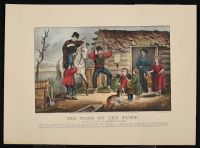
Fine art by Currier and Ives hand-colored lithograph titled
The Turn of the Tune. Traveller Playing the "Arkansaw Traveller.", published by the American printmaking firm Currier & Ives in 1870. It illustrates the second part of a well-known 19th-century American folk story and tune.
The Story Behind the Print
The print is the companion piece to another titled The Arkansas Traveler and depicts the resolution of a humorous encounter between two characters.
The First Part (The Encounter): The story, based on an 1840 experience of Colonel Sandford C. Faulkner, involves a well-dressed traveler getting lost in rural Arkansas and asking for directions and lodging at a squatter's ramshackle cabin. The squatter is unhelpful, giving curt, witty answers and continuously playing only the first half of a fiddle tune.
The Second Part (The Turn of the Tune): As shown in this image, the traveler, who is also a musician, offers to play the rest of the tune, also known as "the turn of the tune". Delighted to finally hear the complete melody he had been trying to remember for years, the squatter and his family become extremely hospitable, offering the traveler a month's lodging, the best bed, and the best corn cakes his wife can make.
Cultural Significance
The story and accompanying tune, which became the official state historic song of Arkansas in 1987, became widespread in American popular culture through minstrel shows, vaudeville acts, and prints like this one. The image and dialogue, however, also perpetuated a "hillbilly" or "backwoods" stereotype of Arkansas for many years, which some locals felt was detrimental to the state's image. |
|
|