 |
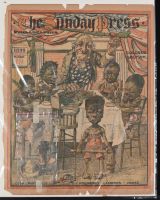
This is an original November 19, 1899 front page from the "Colored Section" of the Philadelphia newspaper The Sunday Press, featuring a political cartoon by illustrator V. Floyd Campbell. The piece is a prominent historical artifact from the era of American imperialism following the Spanish-American War.
Key Details & Historical Context
• Publication & Date. Published in Philadelphia on Sunday, November 19, 1899, just over a year after the end of the Spanish-American War and during the early stages of the Philippine-American War.
• Artist. Signed in the lower right corner by V. Floyd Campbell (1873–1906), an American illustrator and cartoonist active at the turn of the 20th century.
• Caption & Dialogue. The bottom caption reads, "COME AGUI, ARE YOU GOING TO JOIN US?" This is a direct address to Emilio Aguinaldo ("Agui"), the Filipino revolutionary leader who was fighting against U.S. annexation of the Philippines at the time.
• Symbolism & Imagery.
• Uncle Sam stands at the head of a Thanksgiving-style dinner table, carving a large dish labeled "PROSPERITY" while raising a glass. A rifle rests on brackets behind him with a tag reading "TO BE USED ONLY WHEN NECESSARY."
• High Chairs. Seated around the table in high chairs are infantilized, racially caricatured depictions representing territories recently acquired or controlled by the United States: Cuba, Porto Rico (Puerto Rico), the Ladrones (Mariana Islands/Guam), and Hawaii.
• The Philippines. Standing in the foreground next to an empty high chair is a figure representing the Philippines (or Aguinaldo himself), wearing an ammunition belt and holding a wooden rifle, looking reluctant to take his seat.
• Imperialist Propaganda. Like many mainstream American cartoons of 1898–1900, the illustration uses paternalistic and racist tropes to justify U.S. expansionism, portraying colonized peoples as unruly or reluctant children who would benefit from American rule and "prosperity" if they simply stopped resisting. |
|
|