 |
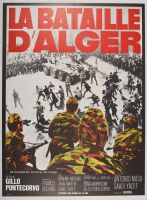
French 1 panel poster for the highly influential 1966 film,
The Battle of Algiers (La Bataille d'Alger), directed by Gillo Pontecorvo.
Overview
Title: The Battle of Algiers (La Bataille d'Alger)
Director: Gillo Pontecorvo
Release Year: 1966
Genre: Political war film, historical drama
Key Actors/Real-life figures: Brahim Haggiag as Ali La Pointe, Jean Martin as Colonel Mathieu, and Saadi Yacef (a real-life FLN commander and the film's co-producer/writer) as Kader
Synopsis & Significance
The film vividly re-creates the key year (1956–1957) of the Algerian struggle for independence from French colonial rule, focusing on the urban guerrilla warfare between the Algerian National Liberation Front (FLN) and the French military paratroopers.
Realism: Shot in a black-and-white, faux-newsreel documentary style using non-professional actors on location in Algiers, the film is known for its intense realism. A disclaimer was added to the American release to confirm it contained no actual newsreel footage.
Moral Ambiguity: It presents a balanced and morally complex view, depicting the brutal tactics and violence used by both sides—FLN bombings and assassinations, and French military torture and repression—without glorification.
Influence: The Battle of Algiers is considered one of the most significant political films in history, studied by both revolutionary insurgent groups (like the Black Panthers and IRA) and military counter-insurgency strategists (including the Pentagon) for its insights into asymmetric warfare.
Awards: The film won the prestigious Golden Lion at the Venice Film Festival and received three Academy Award nominations (a unique achievement as they were in non-consecutive years: Best Foreign Language Film in 1966, and Best Director and Best Screenplay in 1968).
Reception
The movie was initially banned in France for several years due to its controversial depiction of French military actions during the conflict, only receiving a proper release in 1971 after initial terroristic threats to theaters subsided. Internationally, it garnered widespread critical acclaim. |
|
|