 |
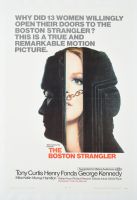
One sheet theatrical release poster for the 1968 film The Boston Strangler, a biographical true-crime thriller based on the real-life serial killer who terrorized Boston in the early 1960s.
Wikipedia
Wikipedia
+1
Directed by Richard Fleischer, the film is noted for its innovative use of split-screen techniques to build suspense and provide multiple viewpoints of the investigation.
Facebook
Facebook
+1
Cast and Characters
The movie features a star-studded cast, most notably Tony Curtis in a departure from his usual comedic roles.
IMDb
IMDb
+1
Tony Curtis as Albert DeSalvo: The man who eventually confesses to the murders.
Henry Fonda as John S. Bottomly: The chief detective and law professor who leads the investigation and obtains the confession.
George Kennedy as Phil DiNatale: One of the lead investigators on the case.
Sally Kellerman as Dianne Cluny: A composite character based on a victim who survives an attack and helps identify the killer.
Wikipedia
Wikipedia
+5
Plot Summary
The film is divided into two distinct halves:
The Investigation: The first hour focuses on the police work and the mounting panic in Boston as investigators follow slim leads and dead ends.
The Interrogation: The second half shifts to a character study of Albert DeSalvo after his capture. It explores his psychology through intense interrogation and hypnosis.
Rotten Tomatoes
Rotten Tomatoes
+2
Reception and Impact
Performance: Tony Curtis received widespread critical acclaim and a Golden Globe nomination for Best Actor for his chilling performance.
Critical Views: While successful at the box office (grossing over $17 million), it received mixed critical reviews. Some praised its documentary-like feel, while others criticized its "multiple image" photography as distracting or dated.
Historical Accuracy: The film was noted for several inaccuracies, specifically its portrayal of DeSalvo as suffering from dissociative identity disorder, a diagnosis he never received in reality.
|
|
|