
Modern Times
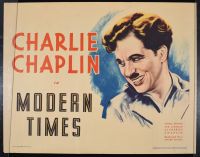
Halfsheet poster for the 1936 film Modern Times
, a satirical masterpiece produced, written, and directed by Charlie Chaplin. It is iconic for being the final screen appearance of his beloved "Little Tramp" character.
Film Overview
Plot: The story follows the Little Tramp (credited as a "Factory Worker") as he struggles to navigate the hardships of the Great Depression and rapid industrialization. After a nervous breakdown on an assembly line and several stints in jail, he joins forces with a young homeless woman, "The Gamin" (played by Paulette Goddard), to survive in a world dominated by machines and social indifference.
Significance: Widely considered one of the greatest films ever made, it was selected for preservation in the National Film Registry for being "culturally, historically, or aesthetically significant". It is famous for its critique of capitalism, dehumanizing factory conditions, and the struggle to preserve humanity in a mechanized age.
The Transition to Sound: Although released nearly a decade into the "talkie" era, Chaplin kept the film mostly silent to preserve the universal appeal of his pantomime. It is notable for being the first time audiences heard Chaplin's voice on screen, though he sang a comical song in a "gibberish" nonsense language rather than speaking dialogue.
Key Scenes and Themes
Man vs. Machine: One of cinema's most famous images depicts Chaplin caught in the giant gears of a factory machine, symbolizing how workers are trapped by industrial capitalism.
Musical Legacy: The film's instrumental theme, composed by Chaplin, later became the famous song "Smile", which underscores the film's message of finding joy and resilience despite hardship.
The Ending: The film concludes with the Tramp and the Gamin walking hand-in-hand down a deserted road toward the horizon, a hopeful yet uncertain farewell to the character.
, a satirical masterpiece produced, written, and directed by Charlie Chaplin. It is iconic for being the final screen appearance of his beloved "Little Tramp" character.
Film Overview
Plot: The story follows the Little Tramp (credited as a "Factory Worker") as he struggles to navigate the hardships of the Great Depression and rapid industrialization. After a nervous breakdown on an assembly line and several stints in jail, he joins forces with a young homeless woman, "The Gamin" (played by Paulette Goddard), to survive in a world dominated by machines and social indifference.
Significance: Widely considered one of the greatest films ever made, it was selected for preservation in the National Film Registry for being "culturally, historically, or aesthetically significant". It is famous for its critique of capitalism, dehumanizing factory conditions, and the struggle to preserve humanity in a mechanized age.
The Transition to Sound: Although released nearly a decade into the "talkie" era, Chaplin kept the film mostly silent to preserve the universal appeal of his pantomime. It is notable for being the first time audiences heard Chaplin's voice on screen, though he sang a comical song in a "gibberish" nonsense language rather than speaking dialogue.
Key Scenes and Themes
Man vs. Machine: One of cinema's most famous images depicts Chaplin caught in the giant gears of a factory machine, symbolizing how workers are trapped by industrial capitalism.
Musical Legacy: The film's instrumental theme, composed by Chaplin, later became the famous song "Smile", which underscores the film's message of finding joy and resilience despite hardship.
The Ending: The film concludes with the Tramp and the Gamin walking hand-in-hand down a deserted road toward the horizon, a hopeful yet uncertain farewell to the character.
Before
Disclaimer
The object and/or subject of this report is private property. This page is for informational purposes only. Unless clearly stated otherwise, all conservation and restoration has been performed by Poster Mountain (PM) or Los Angeles Paper Group (LAPG)I) PM-LAPG has not knowingly withheld any significant information from its evaluation report and to the best of its knowledge all statements and evaluations in this report are true and correct.
II) PM-LAPG stated in the Evaluation Report its own personal, unbiased and professional analysis, opinions and conclusions, which are subject to the assumptions and limited conditions in this evaluation report as set forth hereinabove.
III) PM-LAPG has no present or prospective interests in the property which is the subject matter of this report and it has no present or prospective personal interests or bias with respect to the participants in this matter.
IV) PM-LAPG and its employment and/or compensation for performing this evaluation or any future anticipated evaluation was not conditioned on any agreement or understanding, written or otherwise, that it would report (or present analysis in support) as predetermined specific authenticity, a predetermined evaluation that favors the cause of any party or the attainment of any specific result or occurrence of a specific subsequent event, such as value or marketability.
V) PM-LAPG prepared all opinions and conclusions about the subject property that were set forth in this Evaluation Report. If it has relied on significant evaluation assistance from any individual or individuals in the performance of this evaluation or the appropriation of this evaluation report, PM-LAPG has named such individuals and disclosed the specific task performed in this evaluation report. PM-LAPG certifies that any individual so named is qualified to the same extent as PM to perform the task. PM-LAPG has not authorized anyone to make a change to any item in this evaluation report, therefore, any change made to this evaluation is unauthorized and PM-LAPG will not take responsibility for it.
VI) The Client may not disclose or distribute this Evaluation Report to any potential purchasers of the subject property without first obtaining PM-LAPG's prior written consent. This consent must be obtained before this evaluation report may be disclosed or distributed to any other party, including, but not limited to, the public through advertising, public relations, news, sales, or other media.