
Pattern
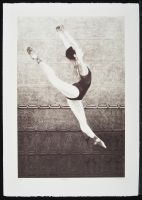
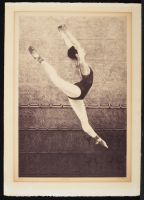
Fine art by GH Rothe mezzotint titled
Pattern (also referred to as The Wall), created in 1982 by the renowned artist G.H. Rothe. Rothe (1935–2007) was a master of the mezzotint technique, a complex printmaking process known for its rich, subtle gradations of tone.
Artwork Details
Artist: G.H. Rothe (Gatja Helgart Rothe)
Title: Pattern
Medium: Original limited edition mezzotint engraving
Year: 1982
Subject: The artwork features a ballet dancer captured mid-leap against a richly textured, patterned background reminiscent of Hispano-Moresque architectural motifs.
The
mezzotint process is a tonal form of intaglio printmaking, known for its rich, velvety blacks and subtle, continuous gradations of light and shade. The term itself comes from the Italian mezzo ("half") and tinta ("tone").
Unlike other engraving methods that build images with lines or dots, mezzotint works from dark to light, by manipulating the surface of a metal plate to control how much ink it holds.
The Mezzotint Process
The technique is laborious, requiring a long preparation process to create the printing surface.
Preparation: The "Ground"
The artist first systematically roughens the entire surface of a copper or steel plate using a specialized tool called a rocker.
The rocker has a curved blade with many small, sharp teeth that, when rocked across the plate in multiple directions, create thousands of tiny pits and burrs.
If inked and printed at this stage, the plate would hold ink uniformly in these pits and produce a solid, deep black print. This roughened texture is called the "ground".
Image Creation: Working from Dark to Light
The image is then created subtractively by smoothing certain areas of the roughened plate:
The artist uses a scraper (a triangular blade) to shave away the burrs and a burnisher (a smooth, blunt tool) to flatten and polish the surface.
Areas that are completely smoothed will hold no ink and print as white.
Areas that are only partially smoothed will hold less ink than the fully roughened areas, producing various shades of gray, or halftones.
Printing
To print the image:
Viscous ink is applied across the entire plate surface and forced into the pits.
The excess ink is carefully wiped away from the surface, remaining only within the roughened areas.
The plate is placed on a high-pressure rolling press with a sheet of damp paper and felt blankets. The pressure forces the paper into the ink-filled pits, transferring the image. The resulting image appears in reverse of the design on the plate.
The delicate nature of the plate's burrs means only a limited number of high-quality impressions can be produced before the tonal quality deteriorates.
Pattern (also referred to as The Wall), created in 1982 by the renowned artist G.H. Rothe. Rothe (1935–2007) was a master of the mezzotint technique, a complex printmaking process known for its rich, subtle gradations of tone.
Artwork Details
Artist: G.H. Rothe (Gatja Helgart Rothe)
Title: Pattern
Medium: Original limited edition mezzotint engraving
Year: 1982
Subject: The artwork features a ballet dancer captured mid-leap against a richly textured, patterned background reminiscent of Hispano-Moresque architectural motifs.
The
mezzotint process is a tonal form of intaglio printmaking, known for its rich, velvety blacks and subtle, continuous gradations of light and shade. The term itself comes from the Italian mezzo ("half") and tinta ("tone").
Unlike other engraving methods that build images with lines or dots, mezzotint works from dark to light, by manipulating the surface of a metal plate to control how much ink it holds.
The Mezzotint Process
The technique is laborious, requiring a long preparation process to create the printing surface.
Preparation: The "Ground"
The artist first systematically roughens the entire surface of a copper or steel plate using a specialized tool called a rocker.
The rocker has a curved blade with many small, sharp teeth that, when rocked across the plate in multiple directions, create thousands of tiny pits and burrs.
If inked and printed at this stage, the plate would hold ink uniformly in these pits and produce a solid, deep black print. This roughened texture is called the "ground".
Image Creation: Working from Dark to Light
The image is then created subtractively by smoothing certain areas of the roughened plate:
The artist uses a scraper (a triangular blade) to shave away the burrs and a burnisher (a smooth, blunt tool) to flatten and polish the surface.
Areas that are completely smoothed will hold no ink and print as white.
Areas that are only partially smoothed will hold less ink than the fully roughened areas, producing various shades of gray, or halftones.
Printing
To print the image:
Viscous ink is applied across the entire plate surface and forced into the pits.
The excess ink is carefully wiped away from the surface, remaining only within the roughened areas.
The plate is placed on a high-pressure rolling press with a sheet of damp paper and felt blankets. The pressure forces the paper into the ink-filled pits, transferring the image. The resulting image appears in reverse of the design on the plate.
The delicate nature of the plate's burrs means only a limited number of high-quality impressions can be produced before the tonal quality deteriorates.
After
Disclaimer
The object and/or subject of this report is private property. This page is for informational purposes only. Unless clearly stated otherwise, all conservation and restoration has been performed by Poster Mountain (PM) or Los Angeles Paper Group (LAPG)I) PM-LAPG has not knowingly withheld any significant information from its evaluation report and to the best of its knowledge all statements and evaluations in this report are true and correct.
II) PM-LAPG stated in the Evaluation Report its own personal, unbiased and professional analysis, opinions and conclusions, which are subject to the assumptions and limited conditions in this evaluation report as set forth hereinabove.
III) PM-LAPG has no present or prospective interests in the property which is the subject matter of this report and it has no present or prospective personal interests or bias with respect to the participants in this matter.
IV) PM-LAPG and its employment and/or compensation for performing this evaluation or any future anticipated evaluation was not conditioned on any agreement or understanding, written or otherwise, that it would report (or present analysis in support) as predetermined specific authenticity, a predetermined evaluation that favors the cause of any party or the attainment of any specific result or occurrence of a specific subsequent event, such as value or marketability.
V) PM-LAPG prepared all opinions and conclusions about the subject property that were set forth in this Evaluation Report. If it has relied on significant evaluation assistance from any individual or individuals in the performance of this evaluation or the appropriation of this evaluation report, PM-LAPG has named such individuals and disclosed the specific task performed in this evaluation report. PM-LAPG certifies that any individual so named is qualified to the same extent as PM to perform the task. PM-LAPG has not authorized anyone to make a change to any item in this evaluation report, therefore, any change made to this evaluation is unauthorized and PM-LAPG will not take responsibility for it.
VI) The Client may not disclose or distribute this Evaluation Report to any potential purchasers of the subject property without first obtaining PM-LAPG's prior written consent. This consent must be obtained before this evaluation report may be disclosed or distributed to any other party, including, but not limited to, the public through advertising, public relations, news, sales, or other media.